03

Given a paired view of a star at varying distance from the observer, the learner answers in two parts: Q1 'How does this star look — disk or point?' (correct response: 'a disk' when close, 'a point' when far) and Q2 'Why?' (correct response: 'because it is close' / 'because it is far'). The learner applies the rule across multiple stars (the Sun and Proxima Centauri) and accepts that the same body looks like a disk OR a point depending on distance.

grade level
5
frames
18
  1. 01The Sun is our local star. Let's explore how it looks to us from different distances.
  2. 02When you look at the Sun from Earth, it looks like a large circle with visible features. We call this shape a disk.
  3. 03This happens because Earth is very close to the Sun. Any star that is close to you will look like a disk.
  4. 04Now imagine you travel far away from our solar system in a spaceship. The Sun will get smaller and smaller in your window.
  5. 05From an extreme distance, the Sun shrinks down to a tiny dot. We call that dot a point of light.
  6. 06This happens because you are very far away. Any star that is far away from you will look like a point.
  7. 07How does the Sun look from this extreme distance, and why?
  8. 08Great job! From far away, the Sun is just a tiny point of light to us. But what if we return home?
  9. 09How does the Sun look from Earth, and why?
  10. 10Exactly right. Up close, a star looks like a large disk to us. Let's see what happens if we travel just a little bit away.
  11. 11How does the Sun look from just past Mars, and why?
  12. 12Mars is farther than Earth, but a spaceship at that distance is still close to the Sun. You still see the Sun as a disk.
  13. 13How does the Sun look from just past Neptune, and why?
  14. 14The Sun is not the only star. Proxima Centauri is another star.
  15. 15How does Proxima Centauri look from Earth, and why?
  16. 16Since Proxima Centauri is so far from Earth, we only see it as a point of light. But what if we traveled there?
  17. 17How does Proxima Centauri look from up close, and why?
  18. 18You have mastered the rule for how we see stars. Any star looks like a disk when you are close to it, and a point when you are far away.

Now imagine you travel much farther, flying just past the icy planet Neptune. You are now very far from the Sun.
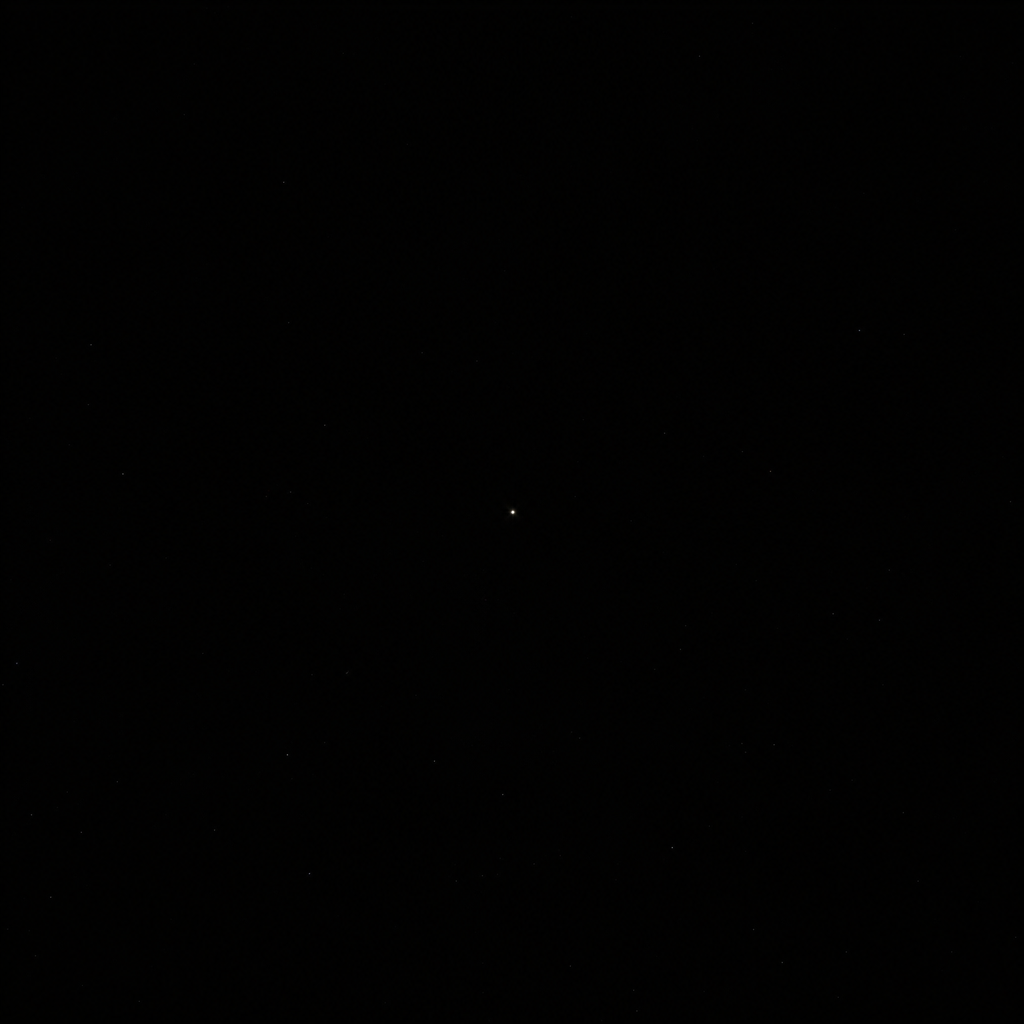
A freezing, completely dark view from just past the orbit of the distant icy planet Neptune, looking back at the Sun, which is now so incredibly far away that it has shrunk down to a single point of light.

Prompt

How does the Sun look from just past Neptune, and why?