11
Given an image or animation of a body in space, the learner identifies it as an outer planet when (and only when) it is a large body, made mostly of gas/ice, far from the Sun (beyond the asteroid belt).
- grade level
- 5
- frames
- 20
Let's look at a piece of granite rock on Earth. It is small, solid, and relatively close to the Sun. We do not call it an outer planet because it is not large, it is not made of gas or ice, and it is not far from the Sun.
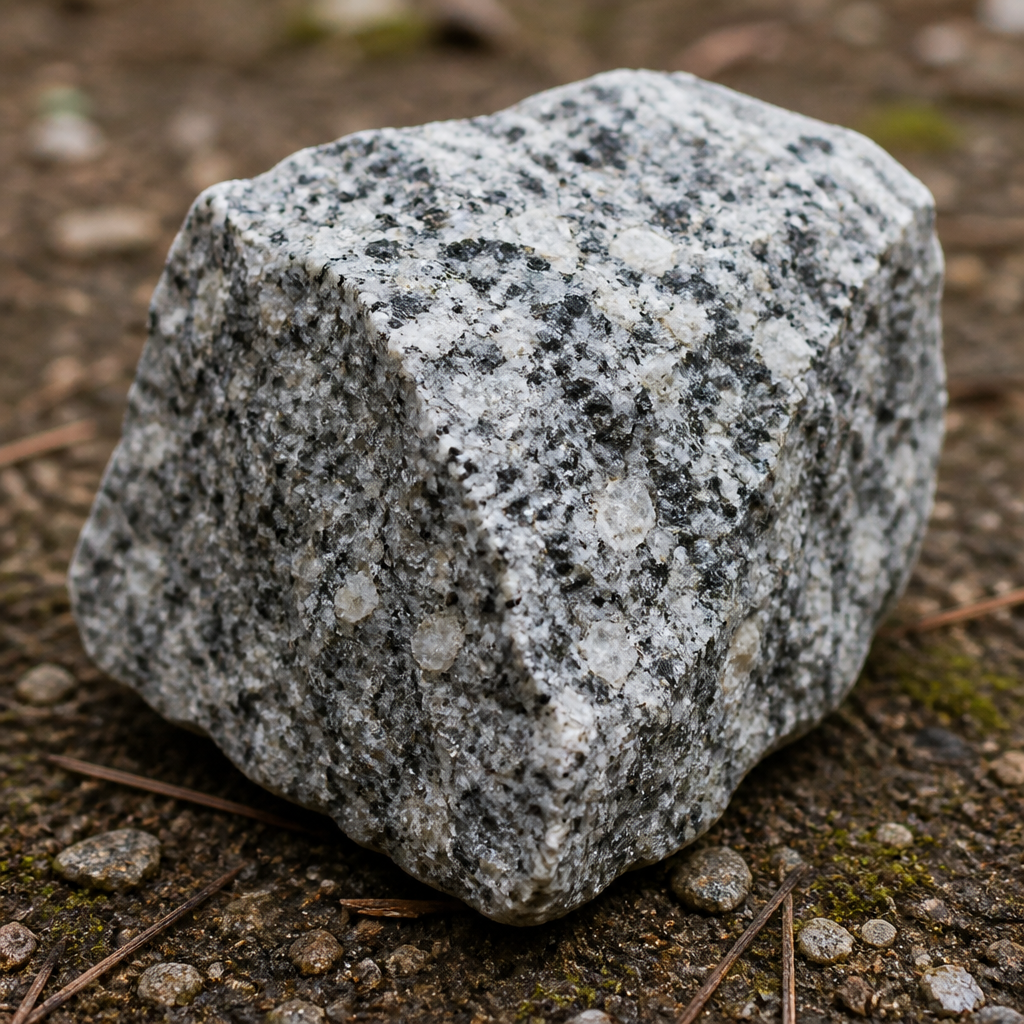
You can see a close-up view of a rough, solid piece of granite rock resting on the ground here on Earth. The rock has a hard, uneven surface with speckles of gray, black, and white minerals. It is a small, everyday object that is solid and rocky, contrasting sharply with the massive gas and ice giants found in deep space.