19
Given an image or animation of a body in space, the learner identifies it as a moon when (and only when) it orbits a planet, distinguishing it correctly from inner planets (1-feature minimum-difference partner), comets, asteroids, and outer planets.
- grade level
- 5
- frames
- 17
Moons can also be huge and covered in ice. This is Ganymede. It orbits the giant planet Jupiter. The size or shape of the body does not matter to us. Because we see that it orbits a planet, we know Ganymede is a moon.
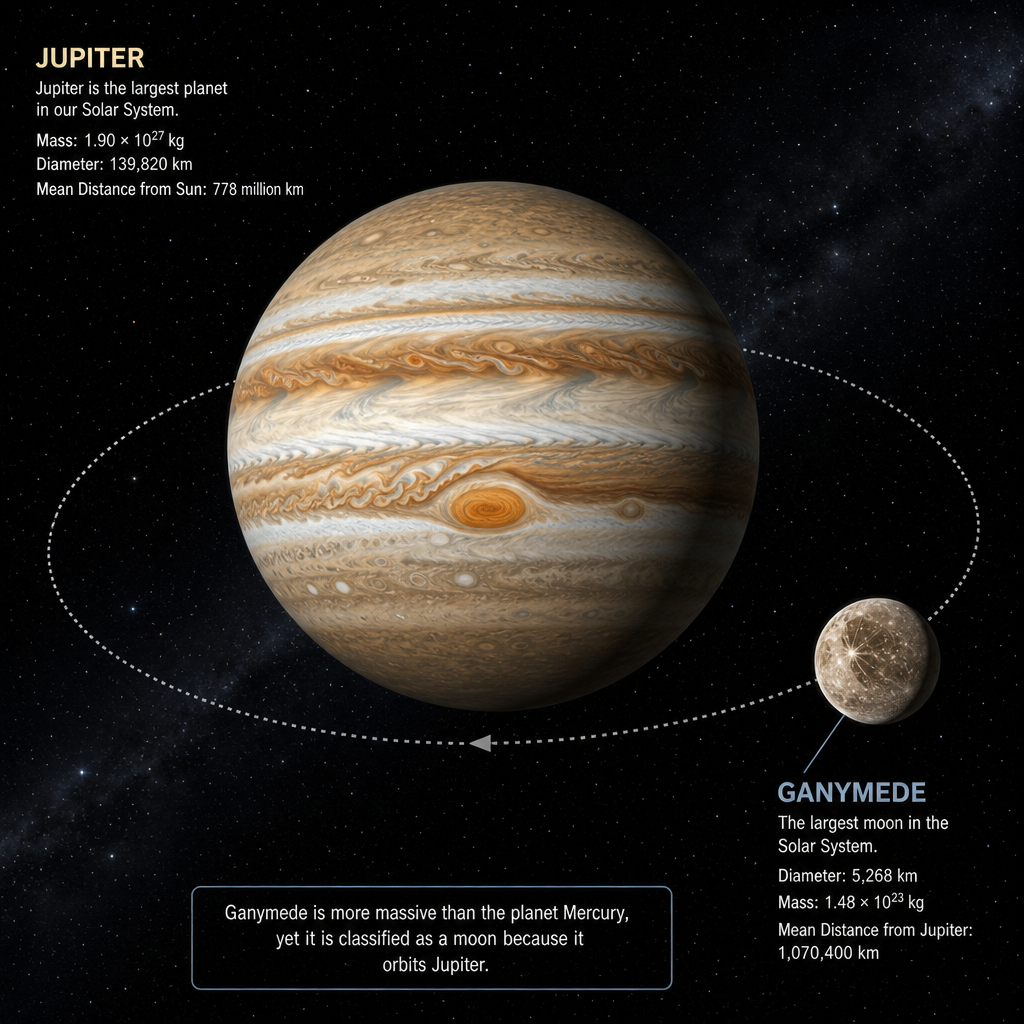
A detailed illustration of the large, striped gas giant Jupiter. A large, icy spherical body named Ganymede is shown on a dotted circular path around Jupiter. This shows us that even very massive bodies are classified as moons if they orbit a planet.