19
Given an image or animation of a body in space, the learner identifies it as a moon when (and only when) it orbits a planet, distinguishing it correctly from inner planets (1-feature minimum-difference partner), comets, asteroids, and outer planets.
- grade level
- 5
- frames
- 17
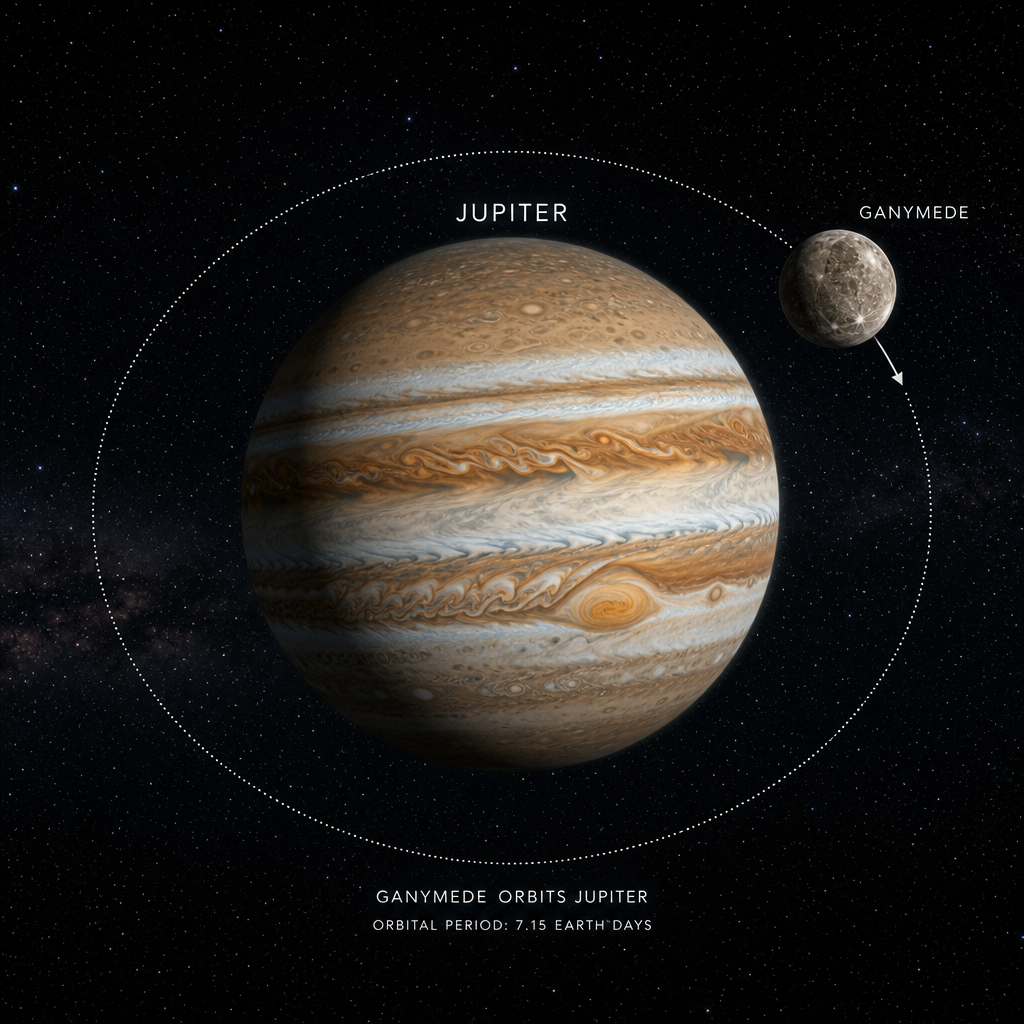
A detailed illustration of the large, striped gas giant Jupiter. A large, icy spherical body named Ganymede is shown on a dotted circular path around Jupiter. You can clearly see Ganymede orbiting a planet, which defines it as a moon despite its massive size.
Prompt
This is Ganymede, a massive icy body orbiting Jupiter. How do we classify Ganymede, and why?