17
Given an image or animation of a body in space, the learner identifies it as a comet when (and only when) it is a frozen body of ice, dust, and rock that orbits the Sun (visible tail near the Sun; no tail when far from the Sun).
- grade level
- 5
- frames
- 16
Take a look at Halley's Comet as it passes near the Sun. You can clearly see the glowing tail because the Sun's heat is vaporizing its ice. This is a classic example of a comet in action.
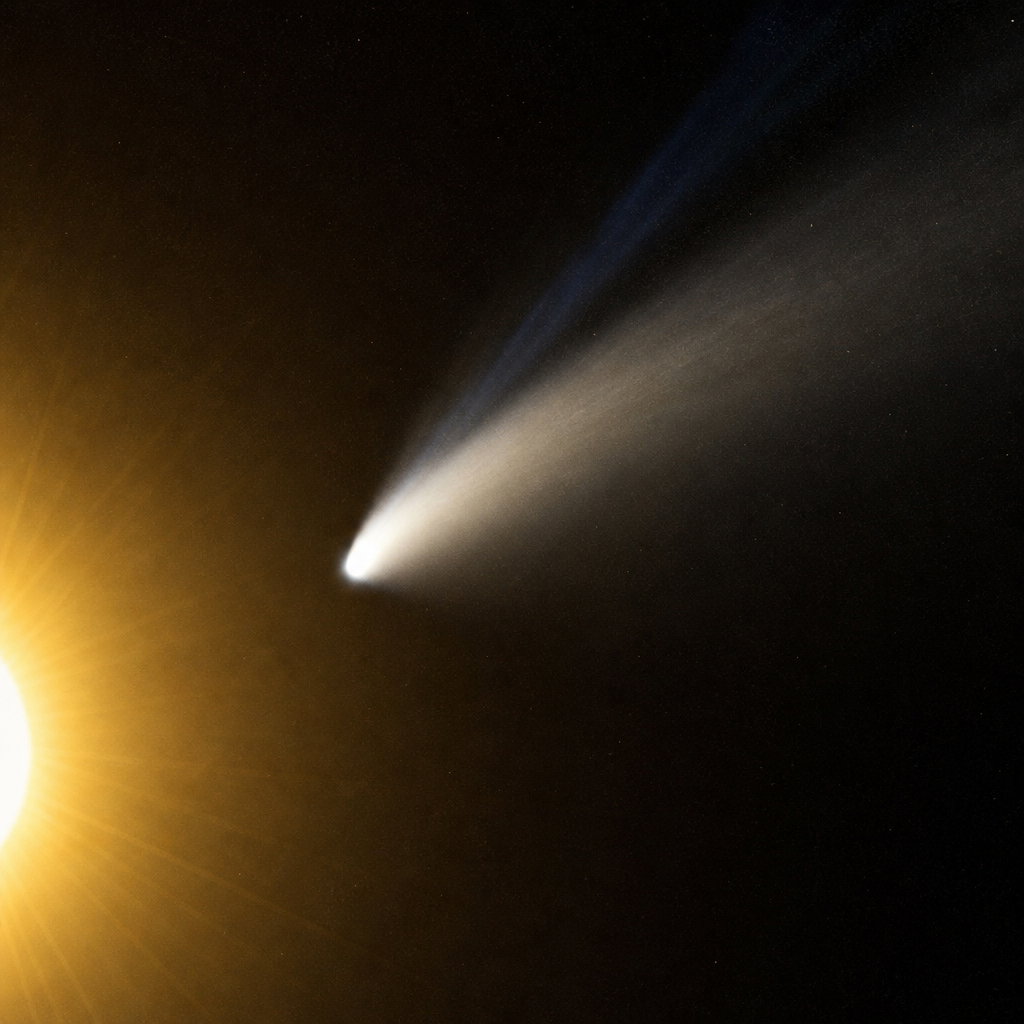
A photograph of Halley's Comet passing near the Sun. As you can see, the comet features a bright, glowing center and a long, sweeping tail of vaporized ice and dust that stretches across the dark backdrop of space.
Prompt
Why does this comet have a visible tail?