17
Given an image or animation of a body in space, the learner identifies it as a comet when (and only when) it is a frozen body of ice, dust, and rock that orbits the Sun (visible tail near the Sun; no tail when far from the Sun).
- grade level
- 5
- frames
- 16
In this image, you are looking at the planet Mars. It is a large, spherical world that orbits the Sun. It is not a frozen chunk of ice and dust, and it does not grow a tail. Planets are much larger and have a very different structure than small, icy comets.
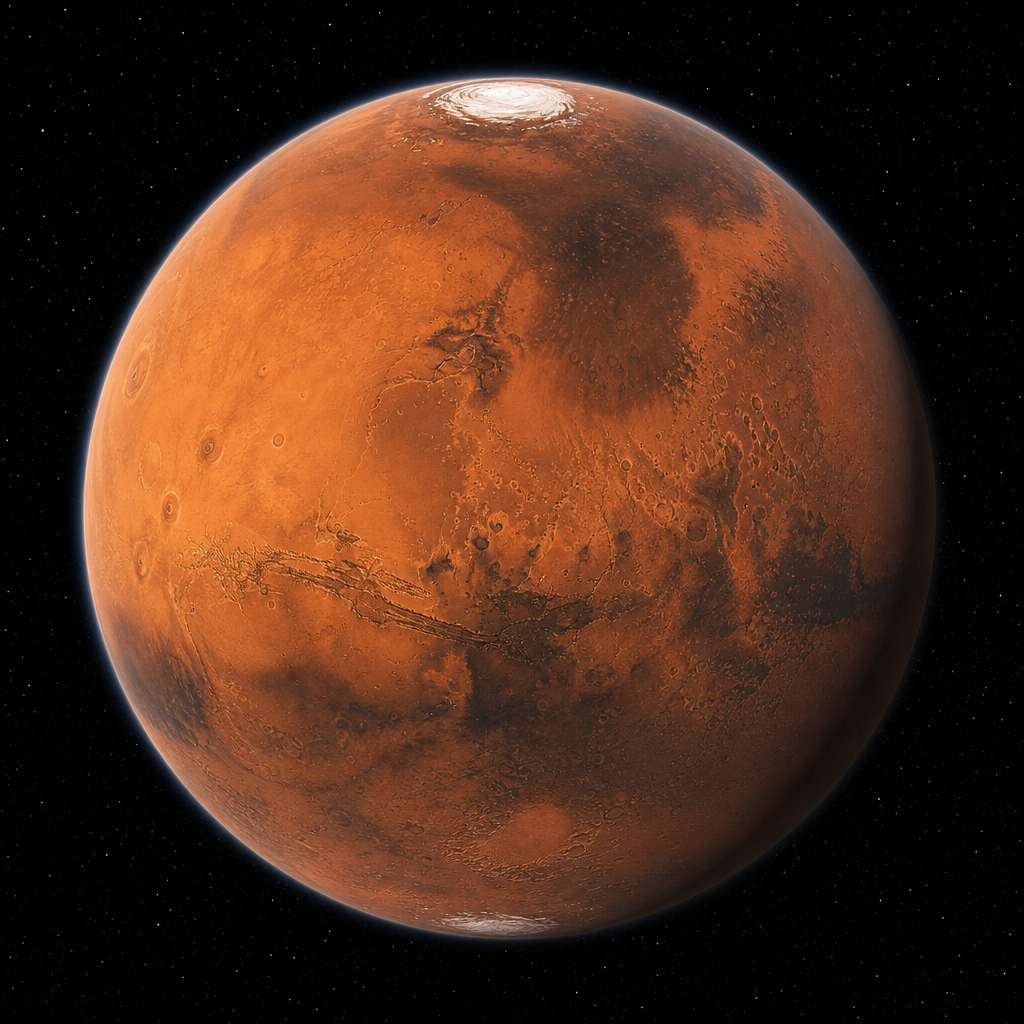
A clear view of the planet Mars. You can see it is a large, perfectly spherical world with a reddish-brown rocky surface, visible polar ice caps, and a thin atmosphere, entirely different from a small comet.
Prompt
What kind of object is Mars?