17
Given an image or animation of a body in space, the learner identifies it as a comet when (and only when) it is a frozen body of ice, dust, and rock that orbits the Sun (visible tail near the Sun; no tail when far from the Sun).
- grade level
- 5
- frames
- 16
Now look at this object. Because it is far from the Sun, it looks to us like a plain, dark chunk of rock and ice. It has no tail at all right now, but it is still a comet! The tail only appears when the comet gets close to the Sun.
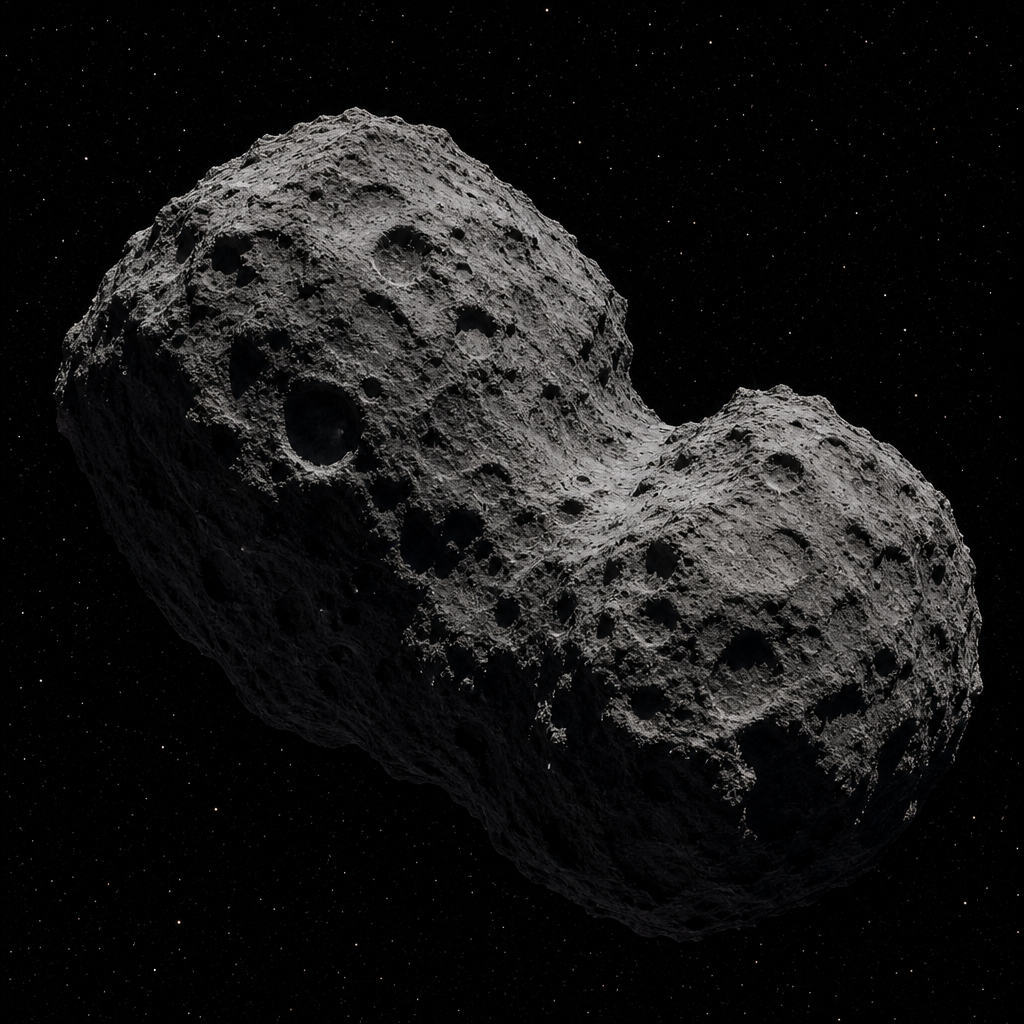
A close-up image of a distant frozen comet nucleus. As you can see, it looks like a dark, irregularly shaped chunk of rock and ice covered in craters, floating in deep space with absolutely no glowing tail visible.
Prompt
Is this dark object a comet?